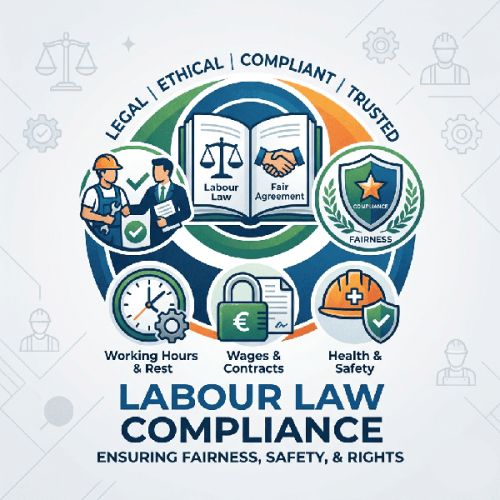
Labour law compliance has undergone a massive transformation, especially in India, with the full implementation of the Four Labour Codes. These codes consolidated 29 archaic laws into four streamlined frameworks designed to simplify business while protecting worker rights.
Whether you are managing a factory or a corporate office, understanding these four pillars is essential for staying audit-ready.
1. The Four Pillars of Modern Labour Compliance
A. The Code on Wages (2019)
This code standardizes how workers are paid across all sectors, removing the old "scheduled employment" distinctions.
-
National Floor Wage: The Central Government now sets a baseline "floor wage." States cannot set their minimum wages below this amount.
-
The 50% Rule: A critical change for payroll. "Wages" must now comprise at least 50% of the total remuneration. This prevents employers from "stuffing" the CTC with allowances to lower their Provident Fund (PF) and Gratuity obligations.
-
Timely Payments: Wages must be paid within 2 working days of an employee's resignation or termination.
B. The Social Security Code (2020)
This extends benefits to the modern workforce, including those in the gig economy.
-
Universal Coverage: Social security (like insurance and retirement benefits) is now extended to unorganized workers, gig workers, and platform workers.
-
Gratuity for Fixed-Term Employees: Workers on fixed-term contracts (FTEs) are now eligible for pro-rata gratuity if they complete one year of service, rather than the five-year rule for permanent staff.
-
Aadhaar Integration: Aadhaar is now the primary identification for social security registration and claims.
C. The Industrial Relations Code (2020)
This focuses on the relationship between employers and trade unions.
-
Negotiating Union: In factories with multiple unions, the one with 51% support is recognized as the sole negotiating union.
-
Threshold for Retrenchment: Establishments with up to 300 workers can now lay off or close down without prior government permission (up from the previous limit of 100).
-
Fixed-Term Employment (FTE): Companies can hire workers for a specific duration via a written contract, providing flexibility while ensuring the worker receives the same benefits as a permanent employee.
D. Occupational Safety, Health & Working Conditions (OSH) Code (2020)
This governs the physical environment of the workplace.
-
Free Health Checks: Employers must provide an annual free health check-up for employees in specified age groups or categories.
-
Women in Night Shifts: Women are now legally allowed to work night shifts (after 7 PM and before 6 AM) in any sector, provided they give written consent and the employer ensures adequate safety and transport.
-
Single License: A contractor working in multiple states can now obtain a single electronic license, drastically reducing paperwork.

krishna
Krishna is an experienced B2B blogger specializing in creating insightful and engaging content for businesses. With a keen understanding of industry trends and a talent for translating complex concepts into relatable narratives, Krishna helps companies build their brand, connect with their audience, and drive growth through compelling storytelling and strategic communication.